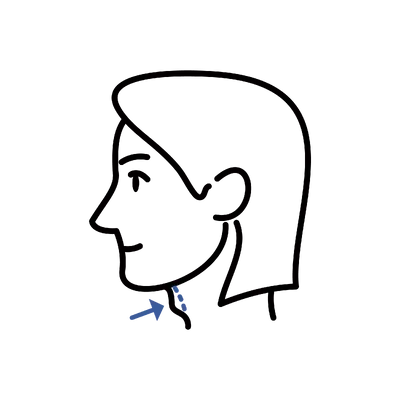
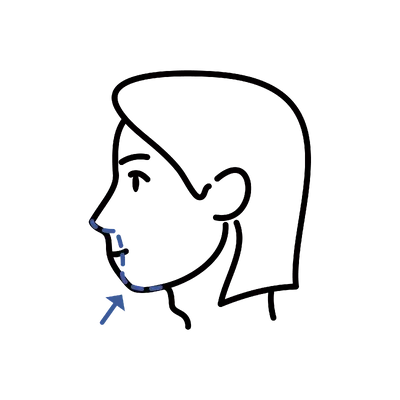
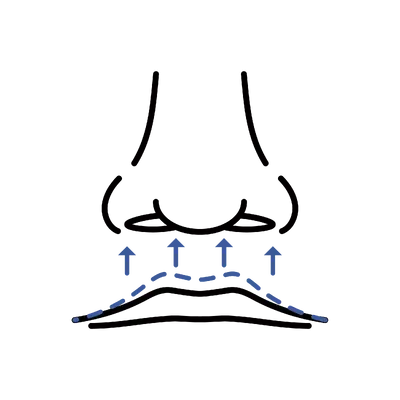
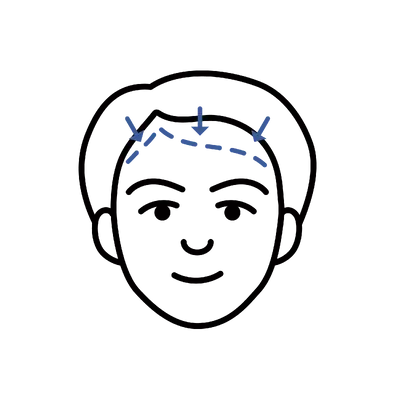
A prominent Adam's apple is one of the most persistent visual markers that can undermine feminization elsewhere. Chondrolaryngoplasty is a short, targeted procedure that shaves down the thyroid cartilage to produce a smooth anterior neck. It is frequently done as a standalone operation or added to an FFS session with minimal extra time or recovery.
Request a Free Quote
Receive Your Plan
We Handle the Rest
Request a Free Quote
Receive Your Plan
We Handle the Rest
Free, no-obligation — you pay the hospital directly with no markup.
What Is Adam's Apple Shaving?
The Adam's apple is formed by the thyroid cartilage of the larynx, which grows and angles forward during testosterone-driven puberty to create a visible bulge in the neck. Chondrolaryngoplasty shaves this prominence down to reduce or eliminate its visibility, producing a flat, smooth neck contour. The procedure targets cartilage rather than bone, which is why recovery is faster and the risk profile is lower than most facial procedures.
It is one of the quickest gender-affirming procedures — usually under an hour — and one that patients consistently say makes a disproportionate difference to daily comfort. Scarves, high necklines, and strategic positioning become things you no longer think about.
Common Concerns Adam's Apple Shaving Can Address
- Visible Adam's apple that catches attention in profile or photographs
- Self-consciousness about the neck area in everyday interactions
- A neck profile that undermines feminization achieved in the face
- Reluctance to wear open necklines or certain styles
Are You a Good Candidate?
- Trans women or transfeminine individuals wanting to reduce a prominent laryngeal bulge
- In good general health with no active throat or vocal cord conditions
- Non-smoker or willing to stop before surgery for clean incision healing
Why Choose Thailand for Adam's Apple Shaving?
Tracheal shave is a relatively simple procedure, but the precision required near the vocal cords means surgeon experience and facility quality still matter significantly.
Precision Focus
Gender-Affirming Specialists
Our partner surgeons routinely perform chondrolaryngoplasty as standalone or combined with FFS — not as an afterthought procedure.
40–60%
Fraction of Home Country Costs
Same technique, same precision, same aftercare protocols. Thailand's lower operating costs pass directly to the patient.
Days, Not Months
Rapid Scheduling
No long referral chains or waiting lists. Most patients are booked within weeks of their initial enquiry.
Dedicated
Coordinated Patient Care
English-speaking coordinators manage everything from consultation scheduling to follow-up — one point of contact throughout.
Tracheal Shave Cost in Thailand
We do not charge for our service — you pay the hospital directly with no markup. Here is what a tracheal shave typically costs and how it compares to prices elsewhere.
🇹🇭 Thailand
$1,500 – $3,300 (฿53,000–฿116,000)
🇺🇸 United States
$4,500 – $8,300
🇦🇺 Australia
A$4,200 – A$7,500
🇬🇧 United Kingdom
£3,800 – £6,800
Your Quote Will Include
- Board-certified surgeon fee
- Anaesthesia & sedation
- Clinic or facility fees
- Post-operative medications
- Follow-up appointments
- Dedicated care coordinator
Prices are approximate and vary by technique, surgeon, and hospital. Your personalised quote will include a full cost breakdown.
Our service is free — you pay the hospital directly with no markup or hidden fees.
Get Your Free Quote
24hr Response
No Obligation
Care Coordinator
Average Cost of Tracheal Shave in Thailand
Chondrolaryngoplasty in Thailand typically costs between $1,500 and $2,700. The price depends on whether it is performed as a standalone procedure or added to an FFS session. Standalone cases are usually at the lower end. Adding it to an existing FFS plan involves minimal extra cost because the operating time is short.
Cost Breakdown
The total covers the surgeon's fee, local anaesthesia with sedation (or a share of general anaesthesia if combined with FFS), facility or theatre fees, post-operative medications, and follow-up appointments including suture removal. There is no additional equipment or implant cost.
What Affects the Price?
The main variables are whether the procedure is standalone or combined and the facility where it is performed. Standalone cases at a clinic cost less than those at a full hospital. If performed as part of an FFS session under general anaesthesia, the marginal cost of adding tracheal shave is relatively small.
Cost by Tracheal Shave Type
Pricing varies by the complexity and scope of the procedure. Typical ranges at our partner hospitals in Thailand:
- Standard tracheal shave (cartilage reduction only): $1,500–$1,900 — suitable for a small, defined Adam's apple
- Extended tracheal shave (deeper cartilage removal): $1,900–$2,300 — for a more prominent thyroid cartilage requiring greater reduction
- Tracheal shave with neck liposuction: $2,200–$2,700 — combined approach for patients who want refined neck contour alongside the shave
Exact pricing is confirmed after your consultation and treatment plan are finalised.
Thailand vs International Price Comparison
Tracheal shave in Thailand costs 40–60% less than equivalent procedures in the US ($4,500–$8,300), Australia (A$4,200–A$7,500), and UK (£3,800–£6,800). For a procedure this straightforward, the savings are substantial — and the technique and aftercare are identical to what you would receive at home.
Types of Tracheal Shave Procedures
The procedure itself is straightforward, but the surgical approach varies depending on whether it is performed as a standalone procedure or combined with other neck or facial work.
Standalone Chondrolaryngoplasty
Performed as an isolated procedure under local anaesthesia with sedation. A single small incision directly over the thyroid cartilage gives the surgeon access to shave the prominence. This is the most common approach when no other neck procedures are planned.
- Quick procedure — typically 30–45 minutes
- Local anaesthesia with sedation means faster recovery than general
- Incision hidden in a natural neck crease
- Best for: patients wanting tracheal reduction as their only procedure
Combined with FFS or Neck Procedures
When chondrolaryngoplasty is part of a broader FFS session or combined with submentoplasty, the cartilage is accessed through an existing incision — either a submental approach or the same theatre session under general anaesthesia. No additional neck scar is needed.
- Avoids a separate neck incision by using an existing surgical approach
- Minimal added operating time when combined with FFS
- Single anaesthetic and single recovery period
- Best for: patients already having FFS or submental contouring who want to add tracheal shave
Tracheal Shave Techniques Used in Thailand
The technique is determined by how the surgeon accesses the cartilage and whether the procedure is combined with other work. The amount of cartilage that can be safely removed depends on the vocal cord attachment point, which is assessed before surgery.
Direct Cervical Approach
A 2–3 cm incision in a natural neck crease directly over the thyroid cartilage. The surgeon carefully exposes the cartilage and shaves it down using a scalpel or burr, checking the contour from multiple angles before closing. This is the most common standalone technique.
- Direct visualisation allows precise, symmetrical reduction
- Scar sits in a natural crease and fades to a fine line
- Well-established technique with predictable outcomes
- Best for: standalone tracheal shave where no other neck work is planned
Submental or Combined Approach
When performed alongside submentoplasty or within an FFS session, the surgeon accesses the thyroid cartilage through an existing incision beneath the chin. This avoids adding a separate neck scar and consolidates recovery into a single period.
- No additional neck incision required
- Ideal when combining with chin liposuction, neck lift, or FFS
- Single recovery period for all neck and facial procedures
- Best for: patients already having chin or neck work who want tracheal shave added
Tracheal Shave Recovery Timeline (Thailand)
Days 1–2
Mild soreness and a sensation of tightness in the throat are normal after the cartilage has been reduced. You may notice slight swelling at the incision site and a temporary scratchiness when swallowing. Pain is minimal and managed with simple analgesics. Rest your voice as much as practical.
Days 3–5
Swelling subsides and throat discomfort diminishes noticeably. You can resume speaking normally — just avoid straining or raising your voice. The incision is covered with steri-strips or a light dressing. Most patients feel well enough to go out comfortably.
Week 1–2
Residual swelling resolves and the smoother neck profile becomes clearly visible. Sutures are removed at your follow-up appointment around day 7. Normal activities including light exercise can resume. Keep the scar out of direct sunlight.
Months 1–3
The incision scar fades from pink to a fine, nearly invisible line sitting within a natural neck crease. The smooth neck contour is fully established and permanent. No further follow-up is typically needed after your departure clearance.
Permanent
Cartilage does not regrow
Immediate Difference
Smooth neck visible within days
Fast Recovery
Back to normal in 1–2 weeks
When Can You Fly After a Tracheal Shave?
Most patients can fly 7–10 days after the procedure, once sutures have been removed and healing is confirmed at your follow-up. Cabin pressure changes do not affect the surgical site. The procedure is gentle enough that travel is straightforward once the incision has closed.
When Can You Return to Work and Exercise?
Most patients can return to desk work within 3–5 days. Light exercise can resume after one week. Avoid activities that involve straining, heavy lifting, or neck hyperextension for two weeks. Swimming should wait until the incision is fully healed — typically around 10 days.
When Will You See Final Results?
The smoother neck contour is visible as soon as the initial swelling subsides, usually within the first week. The incision scar takes 2–3 months to fade fully and blend into the natural neck crease. The result is permanent — thyroid cartilage does not regenerate once removed.
Risks and Safety of Tracheal Shave
Chondrolaryngoplasty is a low-risk procedure, but it operates in close proximity to the vocal cords and laryngeal structures. Careful surgical technique is essential to protect voice function.
- Temporary voice hoarseness or subtle change in pitch (usually resolves within days)
- Minor swelling or bruising at the incision site
- Visible scarring if the incision is not well-placed (rare with experienced surgeons)
- Incomplete reduction requiring a touch-up procedure
- Infection at the incision site (rare)
- Temporary discomfort or scratchiness when swallowing
Before surgery, the position and attachment of your vocal cords relative to the thyroid cartilage are assessed to determine how much cartilage can be safely removed. This ensures maximum reduction while preserving voice quality. Any anatomy-specific risks are discussed before you proceed.
Is Tracheal Shave Safe in Thailand?
Yes. Chondrolaryngoplasty is a well-established, low-risk procedure. At accredited hospitals with gender-affirming surgical teams, the complication rate is very low. The key safety factor is the surgeon's understanding of laryngeal anatomy — specifically the relationship between the thyroid cartilage and the vocal cord attachment. Our partner surgeons assess this routinely.
How to Reduce Risks
Choose a surgeon who performs chondrolaryngoplasty regularly, not occasionally. Ensure a pre-operative assessment of your vocal cord position is part of the plan. Follow instructions about voice rest in the first few days. If you smoke, stopping at least two weeks before surgery improves incision healing. These are simple measures that significantly reduce the already low risk profile.
Will It Affect My Voice?
The risk of permanent voice change from chondrolaryngoplasty is very low when performed by an experienced surgeon. The vocal cords sit behind the thyroid cartilage, and the shaving is done on the exterior surface without entering the larynx. Mild temporary hoarseness in the first few days is possible but resolves on its own.
Top Tracheal Shave Surgeons & Clinics in Thailand
Even for a procedure this straightforward, the right surgeon and facility make a measurable difference to the result and the scar.
Leading Hospitals in Bangkok
Our partner hospitals and clinics have dedicated gender-affirming surgery teams. For standalone tracheal shave, the procedure can be performed at a specialist clinic with day-case facilities. When combined with FFS, it is done at a JCI-accredited hospital with full operating theatre and overnight capacity.
Experienced Tracheal Shave Surgeons
Our partner surgeons perform chondrolaryngoplasty regularly as both a standalone procedure and as part of comprehensive FFS. They have specific training in laryngeal anatomy and understand the precise limits of safe cartilage removal. That routine familiarity with the anatomy is what distinguishes a good result from an average one.
What to Look for in a Surgeon
Ask specifically about their chondrolaryngoplasty volume and whether they routinely assess vocal cord position before surgery. Review before-and-after photos focusing on scar quality and degree of reduction. A surgeon who discusses the limits of how much cartilage can be removed — rather than promising a perfectly flat neck regardless — is usually the better choice.
Before and After Results
Tracheal shave results are permanent and visible almost immediately. Here is what to expect.
Typical Tracheal Shave Results
The visible laryngeal prominence is reduced to a smooth, flat, or gently curved anterior neck. The degree of reduction depends on the size of the thyroid cartilage and the position of the vocal cords. Most patients achieve a neck profile where the Adam's apple is no longer detectable in profile or when swallowing. The change is subtle in scale but significant in daily comfort.
What Results Can You Expect?
Results are visible within days as swelling subsides. The scar at the incision site takes 2–3 months to fully mature and blend. By that point, most patients report the scar is essentially invisible, especially if the incision was placed in a natural crease. The smooth neck contour is permanent and requires no maintenance.
Planning Your Trip to Thailand for Tracheal Shave
A standalone tracheal shave requires a shorter stay than most facial procedures. Here is what to plan for.
How Long to Stay in Thailand
Plan for 7–10 days minimum. This covers your consultation (day 1), the procedure (day 2–3), a few days of initial recovery, suture removal around day 7, and a final follow-up before you fly home. If combined with FFS, the stay extends to 14–21 days based on the broader recovery timeline.
What's Included in a Medical Trip
Your coordinator handles scheduling, transfers, and all follow-up appointments. The surgical quote covers the surgeon's fee, anaesthesia, facility fees, medication, suture removal, and follow-up visits. Flights and accommodation are arranged separately, though your coordinator can recommend nearby options.
Standalone vs Combined Trip
If tracheal shave is your only procedure, the trip is short and straightforward — you can be back to sightseeing within a few days. If it is part of an FFS plan, the tracheal shave adds almost nothing to the overall recovery timeline. In either case, Bangkok is the practical base for proximity to your surgical team.
Common Questions About Adam's Apple Shaving
Everything you need to know before your procedure
Seven to ten days for a standalone tracheal shave. This covers consultation, the procedure, initial healing, suture removal around day 7, and a follow-up check before flying home.
The risk of permanent voice change is very low with an experienced surgeon. Some patients notice mild hoarseness for a few days, which resolves on its own. The vocal cord position is assessed before surgery to confirm they will not be affected.
The incision is placed in a natural neck crease and is typically 2–3 cm long. It fades over weeks to a fine line that is very difficult to see, even at close range. Scar quality depends partly on your healing biology, but placement in a crease makes a significant difference.
It is performed under local anaesthesia with sedation, so you feel nothing during surgery. Afterward, most patients describe mild soreness and a scratchy throat that lasts a few days. Standard pain relief manages it comfortably.
Most patients can fly 7–10 days after the procedure, once sutures are removed and healing is confirmed. Cabin pressure changes do not affect the surgical site.
Your quote covers surgeon fees, anaesthesia and sedation, operating theatre or clinic fees, post-operative medications, suture removal, follow-up appointments, and a dedicated care coordinator. Flights and accommodation are separate.
Yes — this is one of the most common combinations. Adding chondrolaryngoplasty to an FFS session involves minimal extra operating time and does not meaningfully extend recovery. It is often the most efficient way to address the neck alongside facial bone work.
The amount depends on the size of your thyroid cartilage and where the vocal cords attach. Most patients achieve a smooth, flat neck profile. The achievable degree of reduction is discussed during consultation based on your specific anatomy.
Yes. Thyroid cartilage does not regenerate once removed. The smooth neck contour is permanent and requires no maintenance or repeat procedures.
Avoid blood-thinning medications and supplements for at least two weeks before surgery. If you smoke, stop a minimum of two weeks prior to promote clean incision healing. Stay hydrated in the days beforehand and arrange soft foods and warm drinks for the first few days of recovery. Mention any previous neck or throat surgery during consultation, as it may affect the approach.
NP
Nick Peplow
REVIEWED BY
Patient Care Director
Last reviewed: March 25, 2026
Medical disclaimer: Content on this site is provided for informational purposes and should not be treated as medical advice. Outcomes, timelines, and eligibility differ from person to person. Speak with an experienced gender-affirming surgeon before proceeding with any procedure.