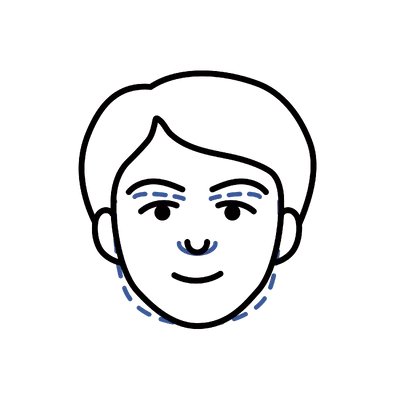
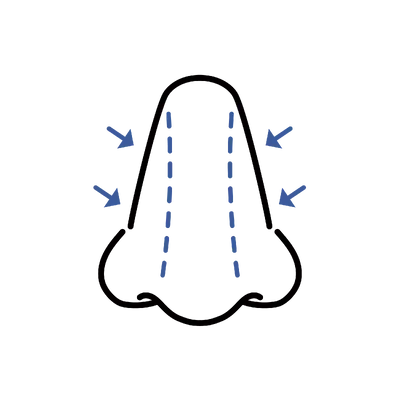
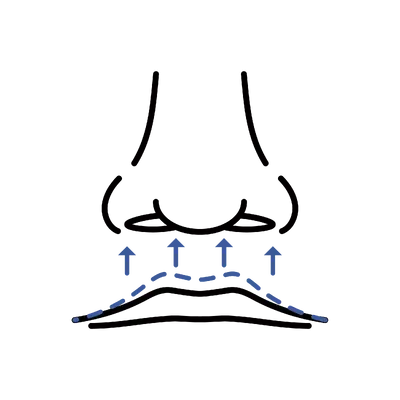
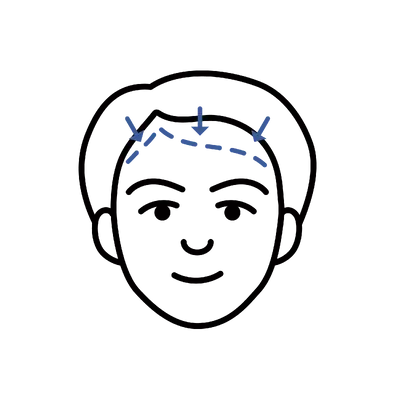
The jawline and chin are among the strongest gender markers in the face. A wide, square jaw reads as masculine. A tapered, V-shaped lower face reads as feminine. Jaw and chin contouring reshapes the mandible and chin bone to produce the lower facial proportions that match your identity — whether that means narrowing and softening or widening and projecting.
Request a Free Quote
Receive Your Plan
We Handle the Rest
Request a Free Quote
Receive Your Plan
We Handle the Rest
Free, no-obligation — you pay the hospital directly with no markup.
What Is Jaw & Chin Contouring?
Jaw and chin contouring is a group of bone-sculpting procedures that modify the shape of the mandible and chin to change the lower facial silhouette. For feminization, the mandibular angles are reduced and the chin is narrowed, shortened, and sometimes set back — creating a smooth transition from ear to chin and an overall oval or heart-shaped face. For masculinization, custom implants or bone advancement widen the jaw angles and project the chin forward.
All bone work on the jaw and chin is done through incisions inside the mouth, between the lower lip and the gum. No external cuts, no visible scars. The surgeon uses oscillating saws, piezoelectric instruments, and rotary burrs to reshape the bone with precision. Pre-operative 3D CT imaging guides every cut.
Common Concerns Jaw & Chin Contouring Can Address
- Wide or flared jaw angles that create a square, masculine lower face
- Broad, heavy chin that dominates the lower face disproportionately
- Lower facial width that conflicts with a feminized upper face
- A recessed or narrow chin that lacks masculine projection
Are You a Good Candidate?
- Trans or gender-diverse individuals seeking lower facial reshaping aligned with their identity
- In good general health with no active dental infections or TMJ disorders
- Non-smoker or willing to quit before surgery to support bone healing
- Clear understanding of what bone reshaping can achieve for lower face proportions
Why Choose Thailand for Jaw & Chin Contouring?
Jaw and chin contouring requires maxillofacial or craniofacial surgical skill, 3D imaging, and accredited hospital infrastructure. Thailand's top centres deliver all three at significantly lower cost.
Maxillofacial Skill
Bone Surgery Specialists
Our partner surgeons are trained in craniofacial bone work and perform jaw and chin contouring as a core part of gender-affirming practice.
40–60%
Meaningful Cost Savings
Same 3D CT planning, same piezoelectric instruments, same titanium hardware. The cost difference is operating environment, not surgical quality.
Fast Booking
No Referral Queues
No months-long waiting lists or gatekeeping referral chains. Most patients have a confirmed surgery date within weeks of first contact.
End-to-End
Coordinated Care
Your coordinator manages CT imaging, scheduling, hospital transfers, and every follow-up appointment. One team from enquiry to departure.
Jaw & Chin Contouring Cost in Thailand
We do not charge for our service — you pay the hospital directly with no markup. Here is what jaw and chin contouring typically costs and what drives the price.
🇹🇭 Thailand
$3,500 – $7,700 (฿123,000–฿270,000)
🇺🇸 United States
$10,500 – $19,300
🇦🇺 Australia
A$9,800 – A$17,500
🇬🇧 United Kingdom
£8,800 – £15,800
Your Quote Will Include
- Board-certified surgeon fee
- Anaesthesia & operating theatre
- Hospital stay & nursing care
- Post-operative medications
- Follow-up appointments
- Dedicated care coordinator
Prices are approximate and vary by technique, surgeon, and hospital. Your personalised quote will include a full cost breakdown.
Our service is free — you pay the hospital directly with no markup or hidden fees.
Get Your Free Quote
24hr Response
No Obligation
Care Coordinator
Average Cost of Jaw & Chin Contouring in Thailand
Jaw and chin contouring in Thailand typically costs between $3,500 and $6,300, depending on the number of procedures combined and whether reduction or augmentation is involved. A standalone chin genioplasty sits at the lower end. Adding mandibular angle reduction or custom jaw implants increases the total.
Cost Breakdown
The total includes surgeon fees, general anaesthesia, operating theatre, one night in hospital, 3D CT imaging, titanium hardware or implants, post-operative medications, and follow-up appointments. Surgeon fees reflect the technical precision required for bone work near the inferior alveolar nerve.
What Affects the Price?
The main factors are scope and complexity. Mandibular angle reduction plus genioplasty costs more than either procedure alone. Custom 3D-printed implants for masculinization are more expensive than standard implants. Piezoelectric instrumentation, which offers greater precision and nerve safety, may add to the cost at some facilities.
Cost by Jaw & Chin Contouring Type
Pricing varies by the complexity and scope of the procedure. Typical ranges at our partner hospitals in Thailand:
- Chin contouring alone (genioplasty): $3,500–$4,500 — single-site reduction or reshaping of the chin
- Jaw angle reduction alone: $4,000–$5,200 — mandible angle shaving for a softer jawline
- Combined jaw and chin contouring: $5,200–$6,300 — full lower-face feminisation addressing both jawline and chin in one session
Exact pricing is confirmed after your consultation and treatment plan are finalised.
Thailand vs International Price Comparison
Jaw and chin contouring in Thailand costs 40–60% less than equivalent procedures in the US ($10,500–$19,300), Australia (A$9,800–A$17,500), and UK (£8,800–£15,800). The difference reflects Thailand's lower operating costs. Surgical techniques, imaging, and hardware are the same as those used in international centres.
Types of Jaw & Chin Contouring in Thailand
The direction of change — reduction for feminization versus augmentation for masculinization — determines which techniques are used. Both are performed through the same intraoral approach.
Feminizing Jaw & Chin Reduction
Mandibular angle reduction narrows the lower face by shaving the flared jaw angles. Reduction genioplasty repositions the chin bone to decrease width, height, or projection. Combined, they transform a square lower face into a tapered oval or heart shape. All incisions inside the mouth.
- Eliminates the wide jaw angle and softens the lower facial contour
- Chin narrowing, shortening, and setback achieved simultaneously
- Piezoelectric instruments allow precise bone cutting near the nerve
- Best for: transfeminine patients with a square or wide lower face
Masculinizing Jaw & Chin Augmentation
Custom implants or bone advancement add width to the jaw angles and projection to the chin. Sliding genioplasty advances the chin bone forward using titanium fixation. Jaw angle implants create the flared, square silhouette testosterone cannot build on its own.
- Custom implants designed from 3D CT data for anatomical precision
- Sliding genioplasty uses your own bone for permanent chin advancement
- Jaw angle implants create the angular lower face hormones miss
- Best for: transmasculine patients wanting a stronger, more angular lower face
Jaw & Chin Contouring Techniques Used in Thailand
Every cut and every implant is planned from 3D CT data. The inferior alveolar nerve — which provides sensation to the lower lip and chin — is mapped and protected throughout. Here are the core techniques.
Mandibular Angle Reduction
The flared posterior jaw angles are reduced using an oscillating saw or piezoelectric instrument through an intraoral incision. The outer cortex of the mandible may also be shaved to narrow the body of the jaw. This is the primary technique for transforming a square jaw into a tapered lower face.
- Eliminates the wide, flared angle associated with a masculine jaw
- All incisions inside the mouth with no external scars
- Piezoelectric instruments reduce nerve risk during bone cutting
- Best for: feminizing the lower face by removing the angular jaw prominence
Reduction Genioplasty
A horizontal osteotomy separates the chin bone into a free segment that is repositioned — moved backward, shortened vertically, or narrowed by removing a central wedge. The bone is fixed with titanium plates. This provides millimetre-level control over chin shape in three dimensions.
- Adjusts chin height, width, and projection simultaneously
- Millimetre-level repositioning using titanium fixation
- Intraoral approach means no visible scarring
- Best for: feminizing the chin by reducing width, projection, and vertical height
Chin & Jaw Augmentation (Masculinization)
For patients seeking a stronger lower face, sliding genioplasty advances the chin bone forward, or a custom implant is placed to increase projection and width. Jaw angle implants are placed over the mandibular angles to create a wider, more angular lower face.
- Custom implants designed from 3D CT data for precise fit
- Sliding genioplasty uses the patient's own bone for natural integration
- Jaw angle implants add the flared, square look that defines a masculine lower face
- Best for: transmasculine patients wanting significant lower face augmentation
Jaw & Chin Contouring Recovery Timeline (Thailand)
Days 1–3
Significant lower face swelling peaks around day two, with bruising extending down the neck in some patients. Your jaw feels stiff and mouth opening is limited. A soft or liquid diet is mandatory. You remain in hospital overnight with IV pain management and a compression garment around the jaw.
Days 4–7
Swelling shifts downward and begins to reduce. Discharge to your hotel with oral medications, antibacterial mouthwash, and dietary guidance. Chewing remains restricted — soups, smoothies, and mashed foods only. Daily coordinator check-ins continue.
Weeks 2–4
Most visible swelling resolves and the new lower face contour becomes apparent. Intraoral sutures dissolve on their own. Softer solid foods can be reintroduced gradually. Lower lip and chin numbness is typical and improves over the coming weeks. Light activity is fine — no contact sports.
Months 2–6
Residual deep swelling dissipates fully, revealing the definitive jaw and chin shape. Sensation returns progressively. Bone healing completes by approximately three months, and by six months the contour has settled into its permanent form.
Permanent
Bone reshaping lasts indefinitely
Gender-Affirming
Lower face matched to your identity
3–6 Months
For swelling to fully resolve
When Can You Fly After Jaw & Chin Contouring?
Most patients are cleared to fly 10–14 days after surgery. Swelling will still be visible but does not pose a risk during air travel. Stay hydrated, avoid chewing hard foods during the flight, and follow your surgeon's post-operative instructions for the flight home.
When Can You Return to Work and Exercise?
Desk work can resume 2–3 weeks after surgery. Light walking is encouraged from day one. Gym and cardio should wait 6 weeks. Contact sports and activities with jaw impact risk need at least 3 months. Full bone healing takes approximately three months.
When Will You See Final Results?
The new lower face contour is visible once the worst swelling subsides around week three. The definitive shape settles by 3–6 months as deep swelling resolves and bone healing completes. Sensation returns over the same period. What you see at month six is your permanent result.
Risks and Safety of Jaw & Chin Contouring
Jaw and chin surgery involves bone modification near the inferior alveolar nerve and dental roots. With experienced maxillofacial surgeons and proper imaging, the procedure has a strong safety record — but you should understand the potential complications.
- Prolonged swelling and bruising of the lower face and neck
- Temporary or persistent numbness of the lower lip and chin
- Asymmetry requiring assessment or revision
- Infection at the bone site or around hardware (rare)
- Dental root injury (rare with proper CT-guided planning)
- Jaw stiffness or limited mouth opening during recovery
- Implant malposition if augmentation is involved
- Bone resorption beneath implants over time (uncommon)
Pre-operative 3D CT imaging maps nerve positions, dental roots, and bone thickness before any cut is planned. This imaging is not optional — it is the foundation of safe bone surgery. Every risk specific to your anatomy and procedure is discussed before you confirm.
Is Jaw & Chin Contouring Safe in Thailand?
Yes — at JCI-accredited hospitals with surgeons certified by the Thai Board of Plastic and Reconstructive Surgery or equivalent maxillofacial credentials. 3D CT planning, piezoelectric instruments, and experienced surgical teams reduce risk to levels comparable with leading international centres. The procedure is well-established and performed at high volume at our partner hospitals.
How to Reduce Risks
Ensure 3D CT imaging is standard in your surgeon's workup — never proceed without it. Verify board certification in plastic, reconstructive, or maxillofacial surgery. Follow smoking cessation instructions precisely — nicotine impairs bone healing. Maintain good dental hygiene before surgery and treat any active infections first. Report any previous jaw surgery or TMJ issues during consultation.
Will the Numbness Be Permanent?
Temporary numbness of the lower lip and chin is very common after jaw and chin surgery because the inferior alveolar nerve runs through the mandible near the surgical site. In the large majority of patients, full sensation returns within three to six months. Permanent numbness is uncommon but should be discussed as a possibility before surgery.
Top Jaw & Chin Contouring Surgeons & Clinics in Thailand
Bone surgery of the jaw demands specific craniofacial or maxillofacial expertise. Here is what distinguishes the right surgeon and hospital for this procedure.
Leading Hospitals in Bangkok
Our partner hospitals are JCI-accredited with in-house 3D CT imaging, piezoelectric instruments, and dedicated craniofacial or maxillofacial surgery teams. These are full-scale hospitals that can manage any complication internally. The infrastructure required for precise jaw bone surgery — imaging, instruments, hardware — is standard at these facilities.
Experienced Jaw Contouring Surgeons
Our partner surgeons are board-certified with specific training in craniofacial bone work. They perform mandibular angle reduction, genioplasty, and jaw augmentation regularly as part of gender-affirming surgical practice. Several have international training from centres known for V-line and jaw reshaping techniques.
What to Look for in a Surgeon
Board certification in plastic, reconstructive, or maxillofacial surgery is essential. Ask specifically about jaw contouring case volume and experience with gender-affirming patients. Confirm that 3D CT planning is a standard part of their process. Review before-and-after photos of patients with similar anatomy. A surgeon who discusses nerve risk and imaging findings openly — rather than glossing over them — is demonstrating the right approach.
Before and After Results
Jaw and chin contouring produces permanent bone changes. Here is what realistic outcomes look like.
Typical Results
Feminizing jaw contouring eliminates the wide jaw angle and narrows the chin, creating a smooth, tapered lower face. The transition from ear to chin becomes a gentle curve rather than an angular step. Masculinizing jaw augmentation adds width and angularity to the lower face, creating the square jaw and projecting chin that define a masculine profile. All changes are structural and permanent.
What Results Can You Expect?
The new contour becomes visible as swelling subsides over weeks 2–4. The definitive shape settles by month 3–6. Your surgeon will use 3D CT imaging during consultation to show you how the bone will be modified and what the expected change will look like. This is the point to ask specific questions about what your anatomy allows and what the limits of bone reshaping are.
Planning Your Trip to Thailand for Jaw & Chin Contouring
Most patients need 10–14 days in Thailand. Here is how to structure the trip.
How Long to Stay in Thailand
Plan for 10–14 days. This covers pre-operative CT imaging and consultation (day 1–2), surgery, one night in hospital, and the recovery period including dietary progression and follow-up appointments. If custom implants are needed, allow additional lead time for fabrication before the surgery date.
What's Included in a Medical Trip
Your coordinator manages imaging, transfers, scheduling, and follow-ups. Surgical quotes cover surgeon fees, anaesthesia, hospital stay, CT imaging, hardware, and aftercare. Flights and accommodation are arranged separately. Your coordinator can recommend nearby hotels and help with dietary arrangements for the soft-food recovery period.
Dietary Planning for Recovery
Stock up on protein-rich soups, smoothies, and meal replacement shakes before surgery. You will be on a liquid diet for the first few days, progressing to soft foods by the end of week one. Hard or chewy foods should be avoided for six weeks to allow bone healing. Your coordinator can help source suitable options near your hotel.
Common Questions About Jaw & Chin Contouring
Everything you need to know before your procedure
Ten to fourteen days minimum. This includes pre-operative CT imaging, consultation, surgery, hospital recovery, and at least one follow-up before you are cleared to fly home.
The procedure is under general anaesthesia — you feel nothing during surgery. Post-operative discomfort is typically a deep ache and tightness in the jaw rather than sharp pain. It is well managed with prescribed medication and reduces significantly within the first week.
No. All incisions are inside the mouth, between the lower lip and gum. There are no external cuts and no visible scars.
Liquid diet for the first few days, soft foods by the end of week one. Most patients return to a normal diet within three to four weeks. Very hard or chewy foods should wait six weeks to allow full bone healing.
Most patients are cleared to fly 10–14 days after surgery. Swelling will still be present but does not affect air travel safety. Stay hydrated and avoid hard foods during the flight.
Your quote covers surgeon fees, general anaesthesia, operating theatre, hospital stay, 3D CT imaging, titanium hardware, post-operative medications, follow-up appointments, and a dedicated care coordinator. Custom implants are quoted separately if needed. Flights and accommodation are not included.
Temporary numbness is very common after jaw and chin surgery because the inferior alveolar nerve runs through the mandible near the surgical site. Full sensation returns within three to six months in the large majority of patients. Permanent numbness is uncommon.
Yes — it is commonly performed alongside forehead contouring and rhinoplasty as part of comprehensive FFS. Combining procedures allows the surgeon to balance the entire face and reduces the total number of anaesthetics and recovery periods.
Verify board certification in plastic, reconstructive, or maxillofacial surgery. Ask about jaw contouring case volume and gender-affirming experience specifically. Confirm 3D CT planning is standard in their process. Review before-and-after photos of patients with similar anatomy.
Stop blood-thinning medications and supplements at least two weeks before surgery. Quit smoking a minimum of four weeks prior — nicotine impairs bone healing. Ensure your dental health is good and treat any active infections beforehand. Stock up on soups, smoothies, and soft foods. A pre-operative 3D CT scan will be arranged to map your bone and nerve anatomy.
NP
Nick Peplow
REVIEWED BY
Patient Care Director
Last reviewed: March 25, 2026
Medical disclaimer: Content on this site is provided for informational purposes and should not be treated as medical advice. Outcomes, timelines, and eligibility differ from person to person. Speak with an experienced gender-affirming surgeon before proceeding with any procedure.